


| Category | Transcatheter Valve Replacements |
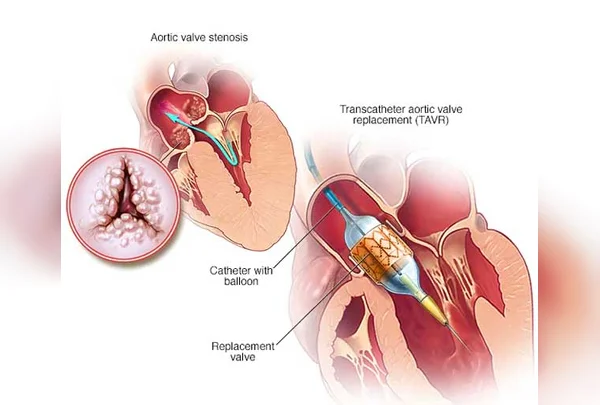
Transcatheter Aortic Valve Replacement (TAVR) is a minimally invasive procedure used to replace a diseased or narrowed aortic valve without open-heart surgery. It is primarily recommended for patients suffering from severe aortic valve stenosis, a condition in which the aortic valve becomes stiff and restricts blood flow from the heart to the rest of the body. TAVR allows doctors to implant a new valve through a catheter, usually inserted via the groin, making it a safer and faster alternative for patients who are elderly or at high surgical risk.
TAVR has revolutionized the treatment of valve disease by offering quicker recovery, less pain, and shorter hospital stays. It significantly improves symptoms such as chest pain, breathlessness, dizziness, and fatigue, while also enhancing overall quality of life.
Age-related valve degeneration
Calcium buildup on the aortic valve
Congenital valve abnormalities
Previous rheumatic heart disease
Long-standing high blood pressure
TAVR is performed in a catheterization lab or hybrid operating room under local anesthesia or mild sedation. A catheter is inserted through the femoral artery (groin) and guided to the heart. The new valve is positioned inside the diseased valve and expanded, pushing the old valve aside and immediately restoring normal blood flow. The procedure typically takes 1–2 hours. Most patients recover quickly and are able to walk within a day.
Q1. Is TAVR safer than open-heart surgery?
Yes, especially for elderly or high-risk patients.
Q2. How long does the TAVR valve last?
Modern valves can last 10–15 years or more.
Q3. Will I need lifelong medication after TAVR?
Blood-thinning medications may be required as advised.
Q4. How soon can I resume daily activities?
Most patients return to routine activities within a week.


